Sign Up
did you know?
Workers of all ages and ranks - even executives in Fortune 500 Companies - say they want more flexibility and would prefer it to a pay increase.
wise words we heard
The juiciest carrot to dangle for prospective employees is not cash; it's flexibility.
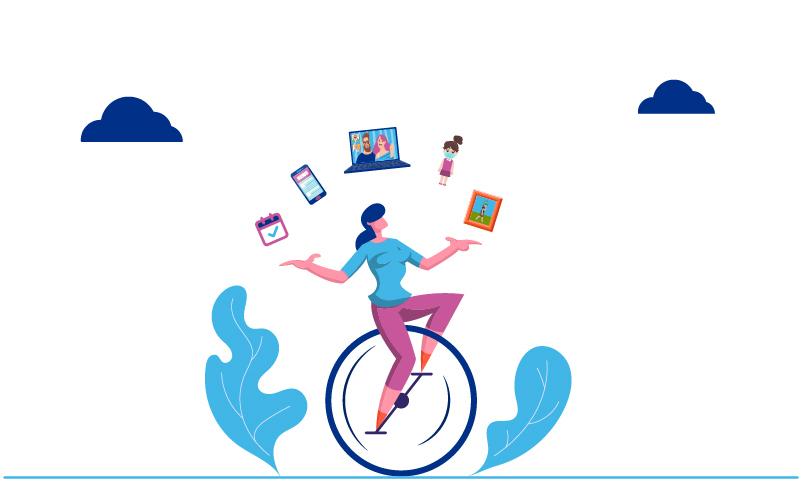
The building blocks of the custom-fit workplace are flexible work arrangements that allow employees to create a work-life fit while successfully meeting the needs of their employers. Alternative scheduling, flexible hours, compressed work weeks, reduced workload, part-time, job-sharing, and working virtually are some of the best known options.
You probably already know someone who takes advantage of such an option: a nurse who works four ten-hour shifts each week, an administrator who negotiated a 32-hour reduced schedule, or a salesperson who telecommutes. These common flexible work arrangements affect when, how, and where we work and are critical pieces of the custom-fit workplace.
Advice for Employers
Even small changes in an employee's schedule add up to large improvements in people's lives, such as letting a dad start work at 9 am instead of 8:30 so he can drop his child off at daycare.
Examine any rigid scheduling traditions. Don't let tradition block you from making changes that will make your workforce more able to manage the dual demands of job and life.
Work with your employees to determine schedules that work for them and the company. Seek win-win solutions.
Advice for Workers
When making a case for a flexible work arrangement, cite the business benefits of worker loyalty, decreased absenteeism, even improved health. (See Studies and Research)
Work with your employer to determine a flexibility strategy that works for both you and the company.
Honor your commitment. If your employer allows you to start work at 9am instead of 8:30, don't push your time out to 9:05 or 9:15 without making prior arrangements. If you work from home one day each week, make sure that day is productive.
DOL Conference Points to Changes Coming to Work-Family
Last week I attended the Department of Labor’s conference to spark a National Dialogue on Workplace Flexibility, run by the Women’s Bureau and Department of Labor in California.
The goal of this conference was to have a business-to-business discussion on workplace flexibility. Over 400 business, union leaders, academics, work life consultants, and policy makers were there. The conference was opened by Sarah Manzano Diaz, the director of the Women’s Bureau and Hilda Solis, the Secretary of Labor who is the first female Cabinet-level Hispanic woman.
Workplace polices and practices have not caught up with a 21st century workforce’s need for flexibility in hours and scheduling. Fathers, mothers, younger and older workers all need flexibility to care for children, elders leaving the hospital sicker.
Flexibility is essential to care for families. It is essential for workers to stay employed in this challenging economy while caring for families. A highlight of the conference was the Zaziie Restaurant owner’s–Jennifer Pillalat–decision to offer 401 k and flexibility and benefits for all workers, including part-time workers who work at least a day a week. While her labor costs are the highest in her business, so are her profits, so it pays off. She has not had turnover in her kitchen for seven years.
I also enjoyed Joan Williams’ comments that companies focus too much on the front end labor costs of minimal staffing and tough absenteeism policies and not enough on back end costs of turnover and negative work behaviors.
Companies also need help with implementing flexibility and culture change. A founding member of The National Work Family Health Network, we are partnering with companies to help them design and implement scientifically-based workplace interventions to reduce work-family conflict and improve worker productivity and health.
I encourage future conferences to look at helping individual employees in managing technology as a flexibility challenge from work spilling over to family life via cell phones and lap tops for workers who work online a lot. I have coauthored a book called CEO of Me: Creating a Life that Works in the Flexible Job Age (Wharton/Financial Times Press/ Pearson) that looks at supports for individual self-regulation of boundaries as well as helping give people tools to manage boundaries with a new assessment tool, called workstyle profile, that is available online in April from the Center for Creative Leadership. Go to www.thesustainableworkforceorg or http://ellenkossek.hrlr. msu.edu/ for more about this and my other work.
It is a wonderful time to be a work-family expert, researcher, and organizational speaker, and see the changes that are coming!

Comments
Post new comment